Cement
Machinery and process solutions for processing mineral and clay-based raw materials
Cement production; It is an integrated production process that starts from the preparation of limestone, clay and similar mineral raw materials, and consists of crushing, grinding, homogenization, cooking, clinker production and cement grinding stages.
The capacity and efficiency of the production line depends not only on the features of the machines used, but also on the correct preparation of the raw material, the harmonious operation of the process equipment and the correct design of the entire facility.
Karadayı Makina develops machinery and process solutions for the processing of mineral and clay-based raw materials and offers solutions for the creation of raw material preparation, crushing, grinding, mixing, transportation and auxiliary process equipment needed in cement production facilities.
The main purpose of cement production is; Our aim is to optimize production capacity, energy and operating efficiency by creating a balanced and continuously operating process that is suitable for raw material properties.
Cement Production Process
Although the cement production process may vary depending on the raw materials and production technology used, it generally consists of certain main stages.
A typical cement production process;
Raw material extraction → Raw material crushing → Feeding and dosing → Raw material grinding → Homogenization → Preheating → Clinker baking → Clinker cooling → Cement grinding → Storage → Packaging and shipment
proceeds through stages.
The equipment used at each process stage must prepare materials suitable for the needs of the next stage. For this reason, in cement plant design, it is important to consider the entire production line within the process chain, rather than evaluating the machines one by one.
Preparation of Cement Raw Materials
Bringing the raw materials used in cement production to the appropriate size and physical structure is one of the basic stages of the production process.
Limestone, clay and other mineral raw materials; After being removed from the quarry, it is subjected to crushing, shredding, transportation and dosing processes according to the needs of the production facility.
The aim of the raw material preparation phase is; The aim is to create the appropriate material structure that will enable the subsequent grinding and mixing processes to operate in a more controlled manner.
Raw Material Crushing and Size Reduction
Cement raw materials usually reach the production line in large pieces. Therefore, the material must be brought to the appropriate size before grinding and other processes.
Crushing systems help subsequent process equipment operate more efficiently by reducing the grain size of the raw material.
Different crushing and shredding systems can be used depending on the raw material properties and input size. When selecting a crusher, capacity, material hardness, humidity and targeted output size should be evaluated together.
Controlled Feeding and Dosing
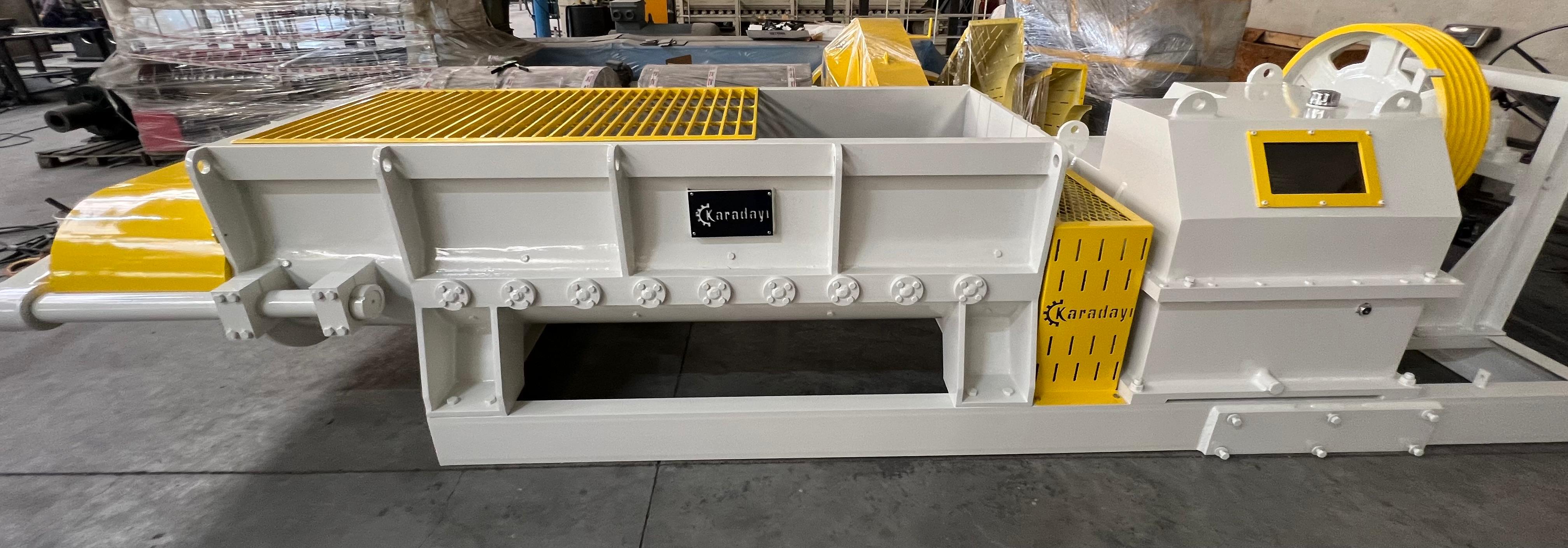
In order for the cement production line to operate stably, raw materials must be fed in a controlled manner throughout the process.
Feeding and dosing systems; It helps to transfer limestone, clay and other additive materials to the production line regularly.
The correct feeding system contributes to a more balanced use of the capacity of the equipment in the production line and the continuity of the process flow.
Raw Material Grinding
Kırma aşamasından sonra hammaddelerin üretim prosesinin gerektirdiği inceliğe getirilmesi gerekir.
The target in the grinding process is; hammaddenin uygun tane boyutuna ve homojenliğe ulaştırılmasıdır.
While grinding cement raw materials, the physical properties of the material, moisture content, target capacity and desired product properties should be taken into consideration.
The capacity of the grinding system should be evaluated together with the feeding and subsequent homogenization processes, not just the performance of a single piece of equipment.
Mixing and Homogenization
In cement production, the preparation of raw materials in certain proportions and in a homogeneous structure is important for the quality of the final product.
Raw materials passed through crushing and grinding stages are transferred to mixing and homogenization systems according to process requirements.
Thanks to homogenization, it is aimed to ensure that the material entering the production process has a more balanced structure and to keep the chemical composition required in clinker production under control.
Clinker Production Process
One of the basic stages of cement production is clinker production.
The prepared raw material mixture is converted into an intermediate product called clinker by going through a high temperature firing process.
In clinker production, preheating, cooking and cooling stages are evaluated together. The correct operation of these processes has a significant impact on the energy consumption, capacity and overall production performance of the cement plant.
Rotary Kiln Systems
Rotary kiln is one of the basic equipment of the clinker production process.
The kiln system at this stage, where the raw material mixture is processed at high temperatures and converted into clinker; It should be designed taking into account parameters such as capacity, temperature distribution, material flow and energy use.
The furnace system must work together with its auxiliary equipment, material handling systems and process control infrastructure.
Clinker Cooling
Controlled cooling of the clinker coming out of the kiln is one of the important stages of the production process.
The purpose of the cooling process is to control the temperature of the clinker and ensure that it is transferred to the next stages of the production line under suitable conditions.
Process parameters such as capacity, material temperature, air flow and energy recovery can be taken into account in the design of the clinker cooling system.
Cement Grinding
After the clinker is produced, the grinding process begins to turn the cement into the final product.
Clinker can be ground with certain proportions of gypsum and mineral additives depending on the type of cement to be produced.
At this stage, the grinding system suitable for the targeted product fineness and production capacity is determined.
Equipment selection and process design are of great importance since a significant portion of the energy consumption in the cement grinding process occurs during the grinding stage.
Cement Storage and Shipment
The cement, whose grinding process is completed, is stored in silos according to the product type.
The capacity of the storage system should be planned in accordance with the production amount, shipping schedule and working capacity of the packaging system.
Cement; It can be shipped in bulk or as a packaged product. For this reason, silo, transportation, packaging and loading systems should be evaluated together with the general logistics structure of the facility.
Cement Production Lines
Cement production facility is an integrated production structure where many machines and auxiliary systems work together.
The main equipment groups that can be evaluated in the cement production line according to the needs of the project are:
Feeding and dosing systems
Crushers
Shredders
Conveyor belts
Grinding systems
Mixers
Silos
Material handling equipment
Filtration systems
Fan and air systems
Rotary kiln systems
Cooling systems
Cement grinding systems
Packaging and shipping systems
Electrical and automation systems
Selection of these equipment and their positioning on the production line; It should be determined according to raw material properties, target capacity, product type and general process structure of the facility.
Cement Plant Design
When planning a new cement factory, it is not enough to choose high capacity machines only.
The entire facility must be designed taking into account material flow, energy use, equipment capacity, maintenance needs and future production goals.
In project design;
Raw material properties
Raw material input capacity
Crushing capacity
Grinding capacity
Raw material dosing
Homogenization
Clinker production capacity
Oven system
Clinker cooling
Cement grinding capacity
Storage capacity
Dust control
Material handling
Electricity and automation
Maintenance and service access
Future capacity increases
Parameters such as are evaluated together.
Thus, instead of a facility that focuses only on machine capacity, a production system in which the entire process can operate in a balanced manner can be created.
Modernization in Cement Production Facilities
Increasing production capacity in the cement industry and making existing equipment more efficient are as important as new facility investments.
In facilities that have been operating for many years, it may be necessary to renew equipment, eliminate process bottlenecks or increase production capacity over time.
Within the scope of modernization;
Renewal of crushing systems
Development of feeding systems
Increasing grinding capacity
Improvement of mixing systems
Renewal of material transport lines
Development of filtration systems
Improvement of fan systems
Renewal of electrical and automation infrastructure
Elimination of bottlenecks in the production line
Studies such as these can be evaluated.
The purpose of modernization is to identify critical points that limit production performance and develop the necessary sections, rather than replacing the entire existing facility.
Energy Efficiency in Cement Production
Cement production is one of the industrial processes that require high energy. Therefore, reducing energy consumption and operating production equipment more efficiently is important in terms of facility operating costs.
Energy efficiency should not be evaluated solely on the energy consumption of a single machine.
Energy use in all processes such as crushing, grinding, transportation, fans, furnace, clinker cooling and cement grinding should be considered together.
Correct equipment selection, appropriate capacity balance, controlled material flow and process automation; It can contribute to improving the overall energy performance of the facility.
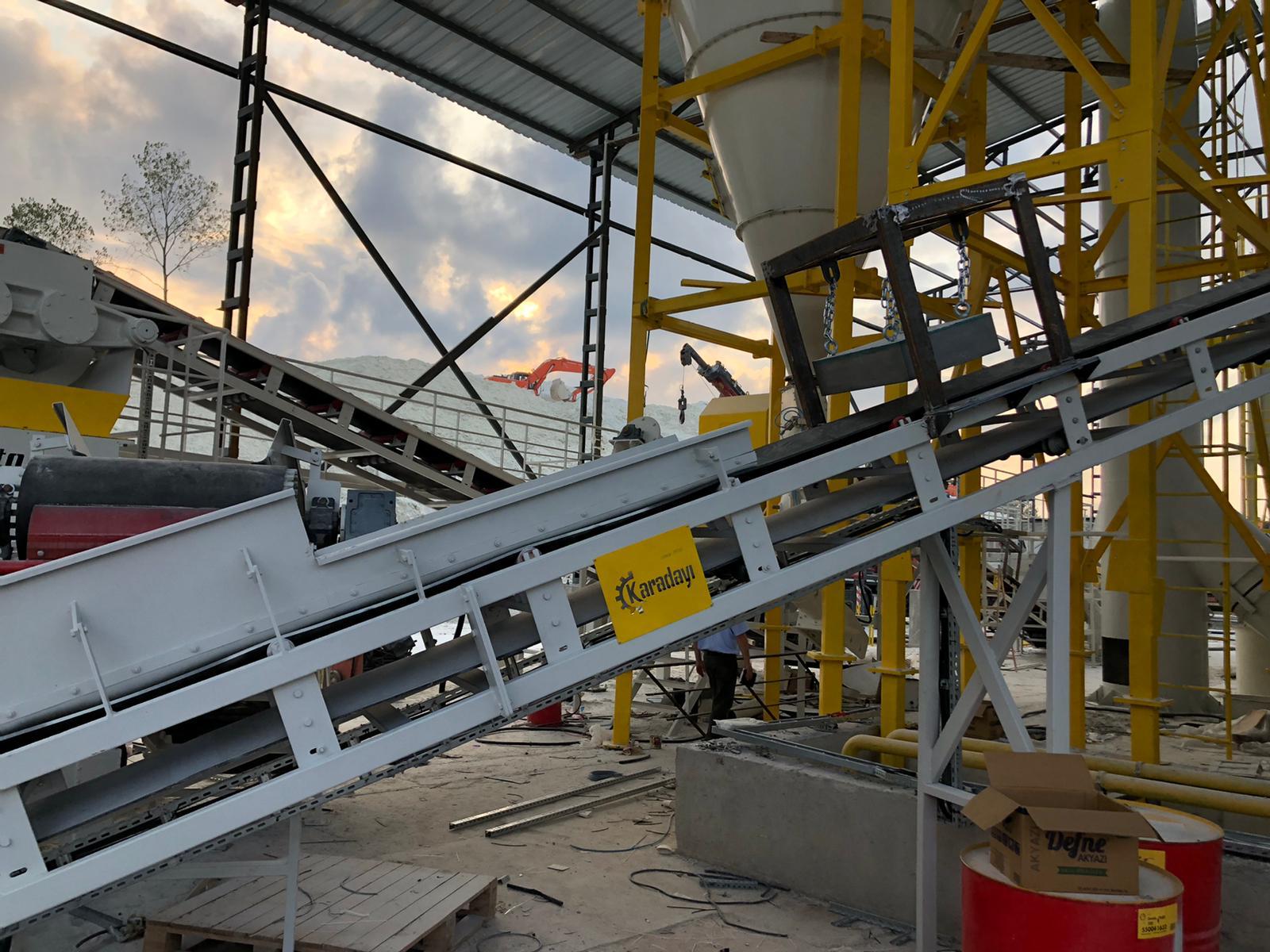
Process and Machine Compatibility in Cement Production
The production capacity of a cement plant is not determined only by the capacity of the highest capacity equipment.
All equipment on the production line must work in harmony with each other.
For example, a high-capacity grinding system cannot operate at its real capacity if the previous crushing and feeding systems cannot provide sufficient capacity.
Similarly, it is possible that a powerful raw material preparation line cannot be used at full capacity due to a bottleneck that may occur in the furnace or subsequent processes.
For this reason, equipment selection, capacity balance and process flow in cement production facilities should be evaluated as a whole.
Cement Production Solutions with Karadayı Makina
Karadayı Makina develops machinery and process solutions for the processing of mineral and clay-based raw materials.
Raw material preparation, crushing, shredding, feeding, mixing, transportation and auxiliary process equipment that may be needed in the cement production process; It is evaluated in line with the technical needs of the facility.
In new facility investments, solutions to identify equipment suitable for the needs of the process and to improve the points that limit production capacity in existing facilities can be addressed.
Engineering-Focused Project Approach
In order to obtain correct results in cement production facilities, machine selection must be evaluated together with the project needs.
The appropriate configuration of equipment can be determined by examining raw material properties, production capacity, target product, facility layout and process flow together.
In Karadayı Makina's project approach, it is aimed to evaluate the analysis, design, production and installation stages as a whole.
Solutions for New Cement Plant and Existing Facilities
When establishing a new cement factory, it is important that the production line is created with the right capacity balance from the beginning.
In existing facilities, activities such as capacity increase, equipment renewal, elimination of process bottlenecks and modernization of the production line may come to the fore.
In both cases, the appropriate process and equipment structure must be created, taking into account the current or planned production targets of the facility.
Why Karadayı Makina?
Process Approach According to Raw Material
The physical properties of the raw materials used in cement production directly affect the process structure of the facility. Therefore, equipment selection and process design should be made taking into account the raw material properties.
Integrated Machinery Solutions
The compatibility of different process equipment such as feeding, crushing, shredding, mixing and conveying in the production line is evaluated together.
New Facility and Modernization
In addition to new production facilities, machine solutions for the capacity development and modernization needs of existing facilities can also be evaluated.
Engineering Oriented Approach
Process needs, equipment capacity, material flow and facility layout are evaluated together to create solutions that meet production targets.
Holistic Evaluation of the Production Process
In cement production, instead of the performance of a single machine, the harmony of the entire production chain, from raw material entry to final product shipment, is taken into account.
Let's Create the Right Solution for Your Cement Production Plant
If you are planning a new cement production facility, increasing the capacity of your existing facility or considering modernization of your production line, let's evaluate the technical requirements of your project together.
Let us create a process structure that suits your production targets by determining appropriate machinery and equipment solutions in line with your raw material properties, target production capacity and process structure of your facility.
Frequently Asked Questions
How does a cement production plant work?
Cement production facility generally consists of raw material preparation, crushing, grinding, homogenization, clinker production, clinker cooling, cement grinding, storage and shipment stages.
What raw materials are used in cement production?
Mineral raw materials such as limestone and clay are mainly used in cement production. Depending on the type of cement to be produced, different mineral additives and process materials can also be used.
Which machines are used in cement production?
Depending on the facility and production technology, crushers, feeding systems, conveying equipment, grinding systems, mixers, silos, fans, filtration systems, oven and cooling equipment, and cement grinding and packaging systems can be used.
What should be taken into consideration when establishing a cement factory?
Raw material properties, production capacity, crushing and grinding capacity, clinker production, kiln system, energy consumption, material handling, storage, dust control, automation and maintenance needs should be evaluated together.
Can the existing cement production facility be modernized?
Yes. By examining the technical status and production bottlenecks of the existing facility, modernization works can be planned in crushing, feeding, grinding, transportation, filtration, automation or other process departments.
How to determine the capacity of cement production line?
When determining capacity, the targeted annual and hourly production, raw material properties, working time, product type and capacity balance of the equipment on the production line should be evaluated together.
How to increase energy efficiency in cement production?
Energy efficiency; It can be improved through different studies such as selection of appropriate equipment, balancing the process capacity, improving material flow, efficient use of grinding systems, optimization of fans and auxiliary equipment and effective use of automation systems.
Can a special machine solution be developed for the cement production line?
Appropriate equipment and machine configuration can be evaluated in line with the raw material, capacity, product and process requirements of the project. When necessary, special engineering solutions can be created for process needs.